
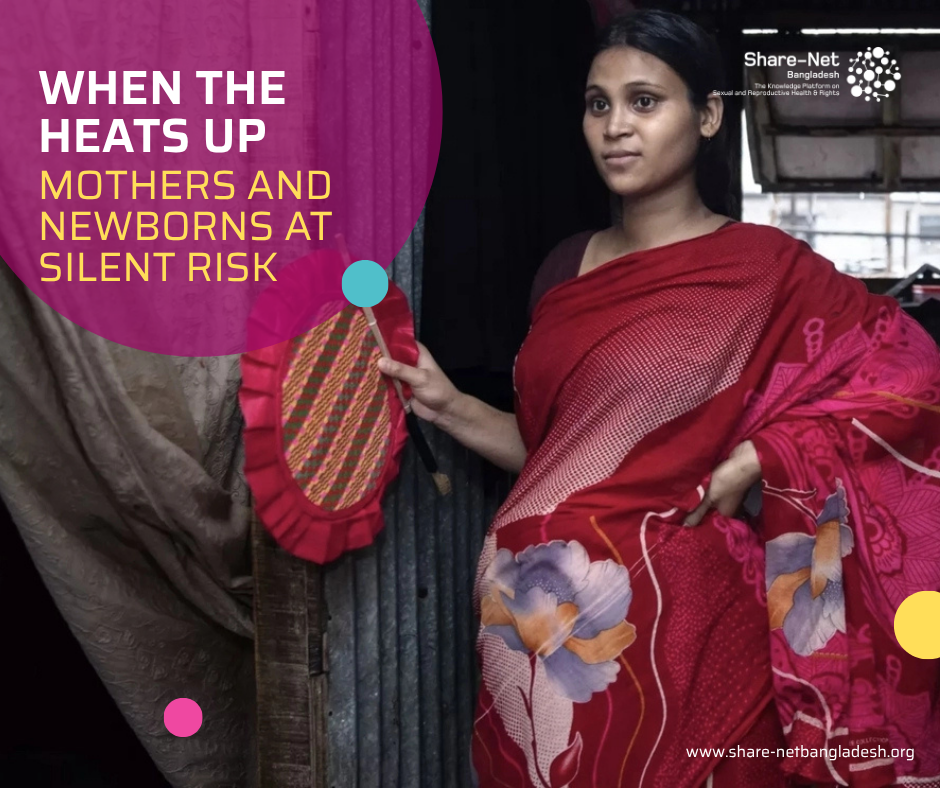
When the Heats Up, Mothers and newborns at silent risk
While the climate crisis threatens lives and livelihoods, its impact on pregnancy deserves urgent attention.
As temperatures rise across Bangladesh, extreme heat is becoming more than a matter of discomfort. For pregnant women, prolonged exposure to high temperatures may increase the risk of pregnancy complications and threaten the health of newborns. Yet the impact of a warming climate on maternal and reproductive health often receives less attention than its effects on agriculture, livelihoods and the environment.
Evidence from Bangladesh makes the concern difficult to ignore. An icddr,b study examining 22,624 pregnancy outcomes in Chakaria, Cox’s Bazar, between 2012 and 2020 found that women exposed to average temperatures of 28°C–32°C had 25% higher adjusted odds of miscarriage than those exposed to 16°C–21°C. The study found an association, not proof that heat directly caused the miscarriages.
The concern extends beyond pregnancy loss. Research cited by the World Health Organization (WHO) links extreme heat to 26% higher odds of premature birth. On October 23, 2026, WHO, the World Meteorological Organization (WMO), UNICEF and UNFPA warned that rising heat poses growing risks to pregnant women, newborns and children.
These findings highlight the need to include climate change in discussions on sexual and reproductive health and rights (SRHR). A safe pregnancy depends not only on healthcare but also on the environment in which women live and work.
Pregnant women working outdoors or lacking access to safe drinking water, proper ventilation and cooling facilities face greater challenges during extreme heat. For low-income families, avoiding outdoor work or reaching a health facility may not be easy.
Floods, cyclones and displacement can further disrupt antenatal check-ups, access to contraception and emergency maternity care, deepening existing inequalities.
Bangladesh must strengthen heat-warning systems, prepare health facilities for heat-related complications and ensure timely care for pregnant women. Climate change is a reproductive health concern, and protecting mothers and newborns must be part of the country’s climate adaptation plans. Every woman deserves a safe pregnancy and quality healthcare, regardless of her circumstances.